
Willesden Green House Renovation
Van Peake takes on house renovations across Willesden Green and the wider London area, from reworking a single room through to a full refurbishment with an extension and a loft conversion. A full renovation in NW2 typically runs £120,000 to £400,000, and partial work costs considerably less. This page sets out what renovating a period house involves, what one costs, how long the work takes, what Brent will and will not let you do, and the parts that get underestimated.
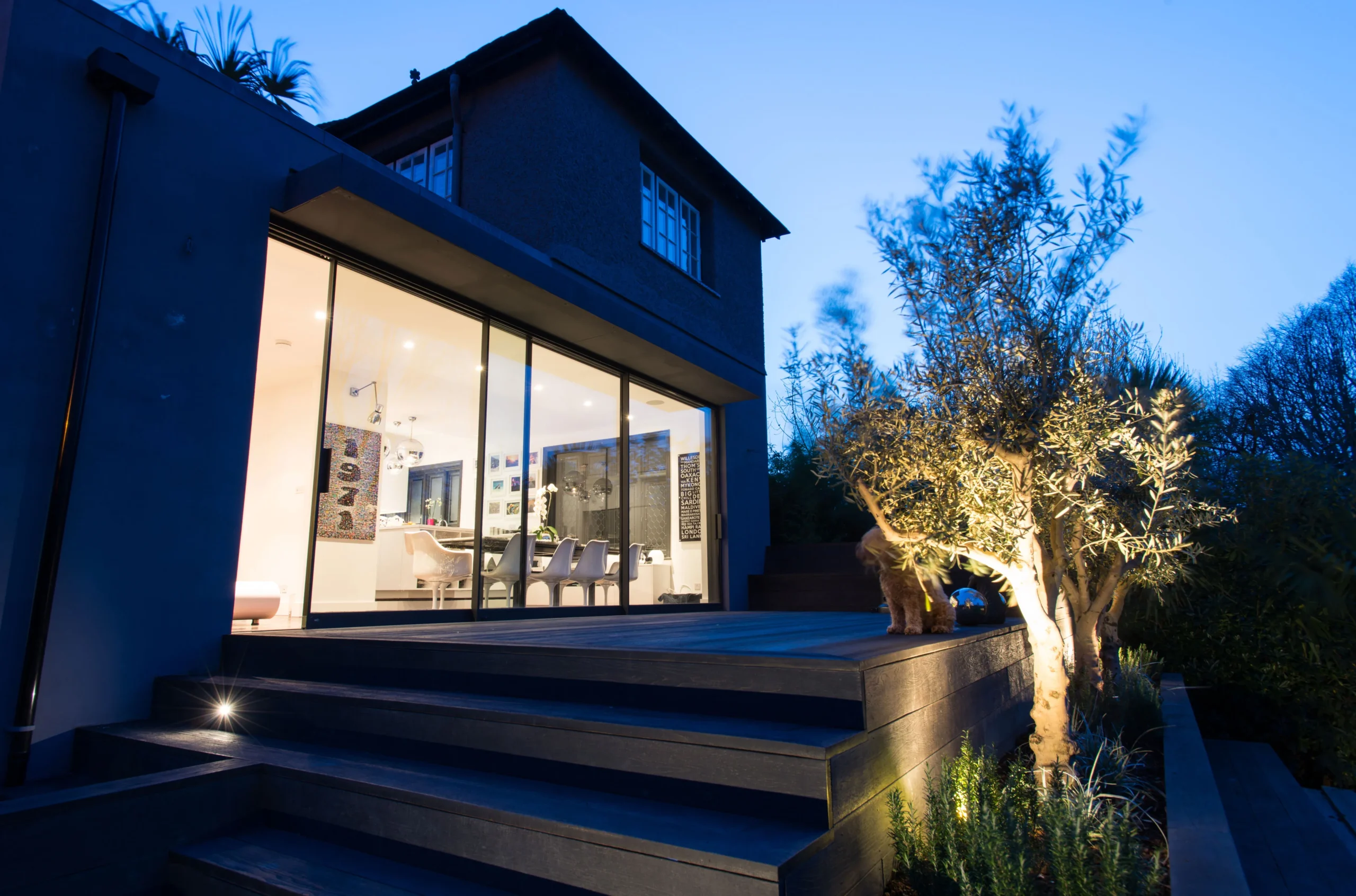
The photographs are from a house we renovated in Willesden Green. The back of the house was extended, the roof converted, and the original leaded glass and parquet kept where they were.
What the project involved
The back of the house was extended under a flat roof, rendered dark so the addition reads as new work rather than an imitation of what was already there. A full-height glazed corner turns the junction, and a wide slider opens onto a raised timber deck with lit steps down to the garden.
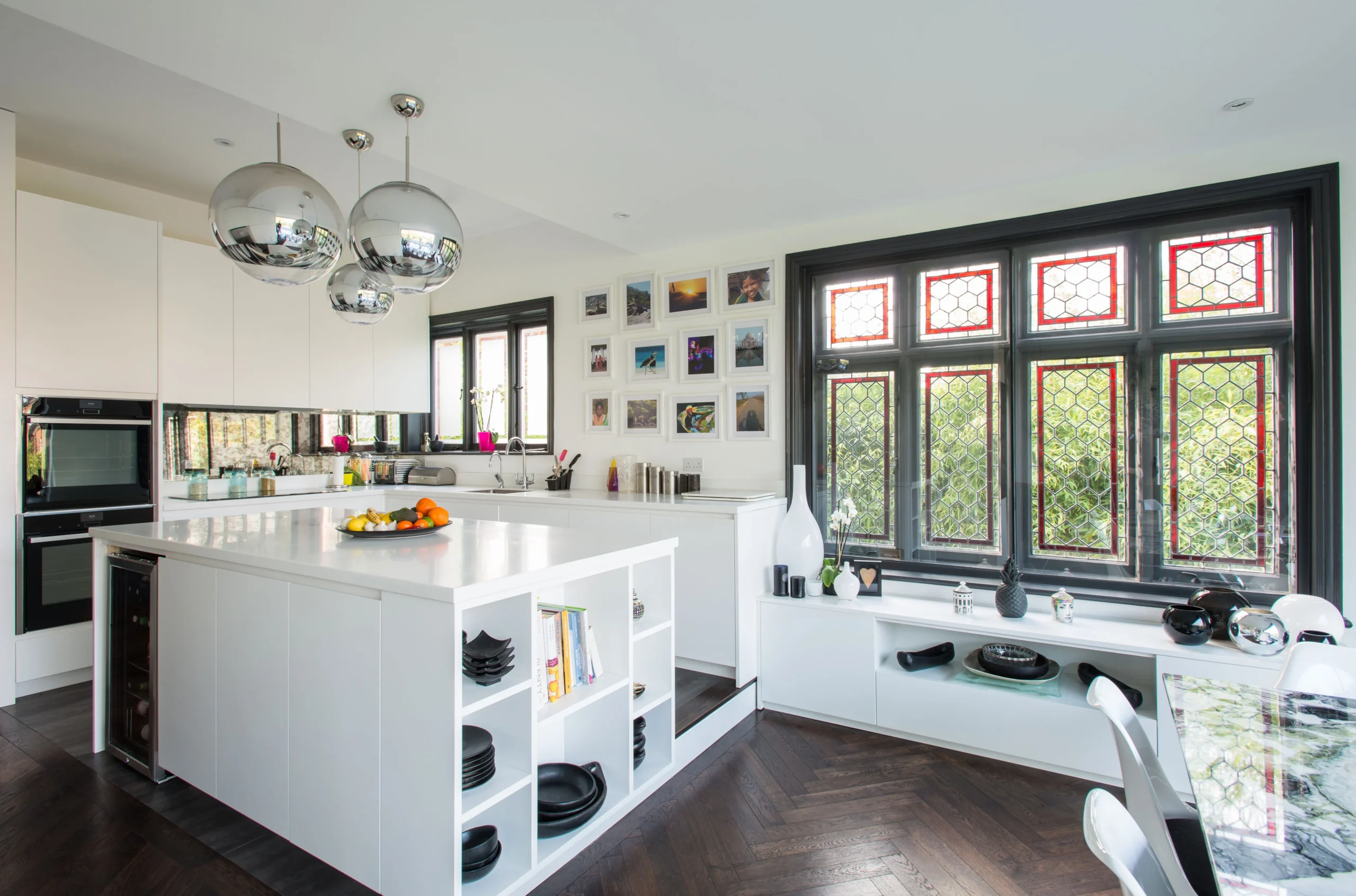
The kitchen sits in that new space. Handleless white units, a white stone island with open shelving cut into the end of it, an antique mirror splashback behind the run, and three chrome globe pendants over the island.
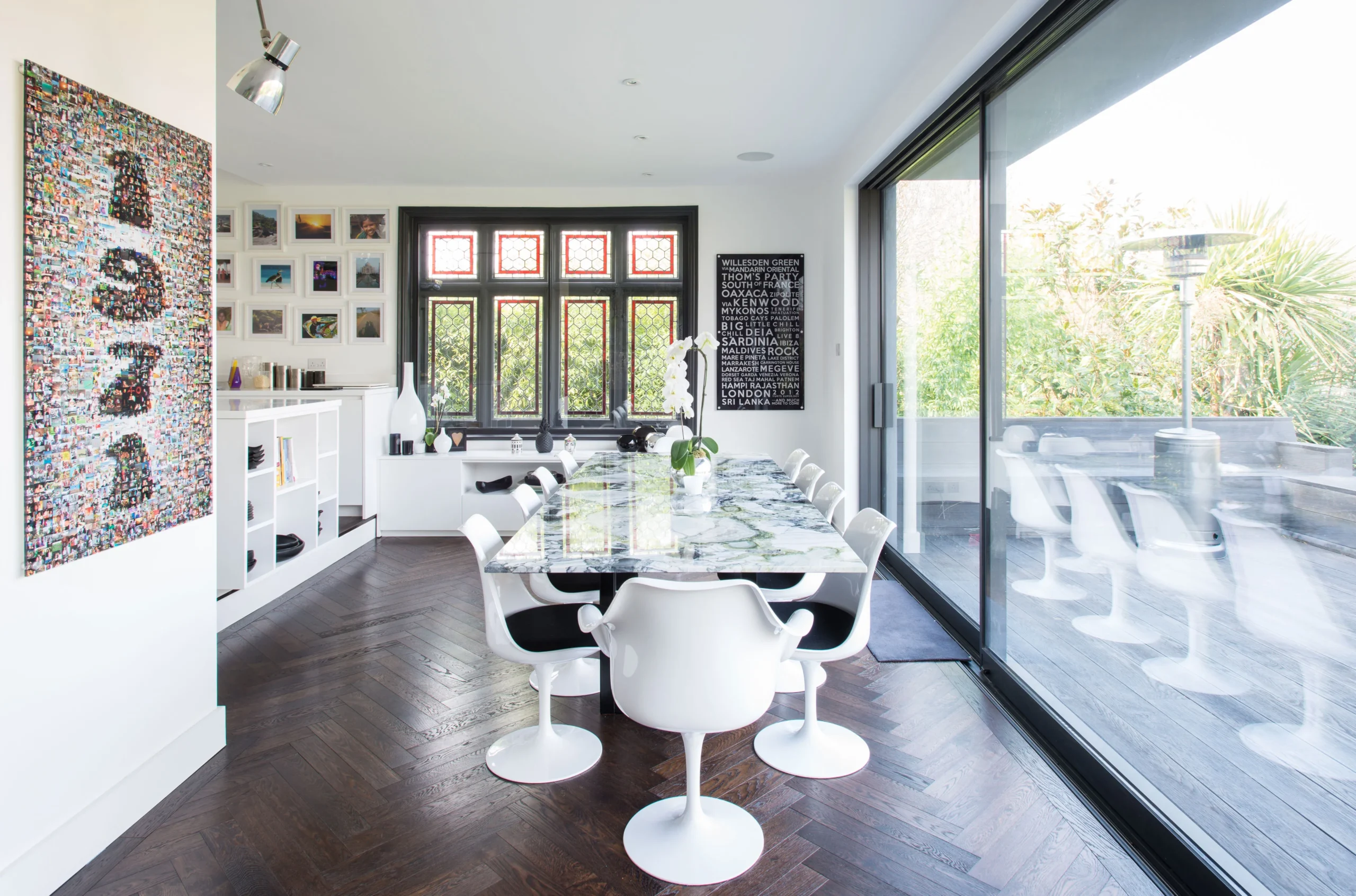
The original leaded windows were kept, black framed with red and clear panes, and they now sit in the same room as the new glazing. That contrast is the point. Keeping them meant working the new structure around them rather than the other way round, which is more work and the reason the house still looks like itself.
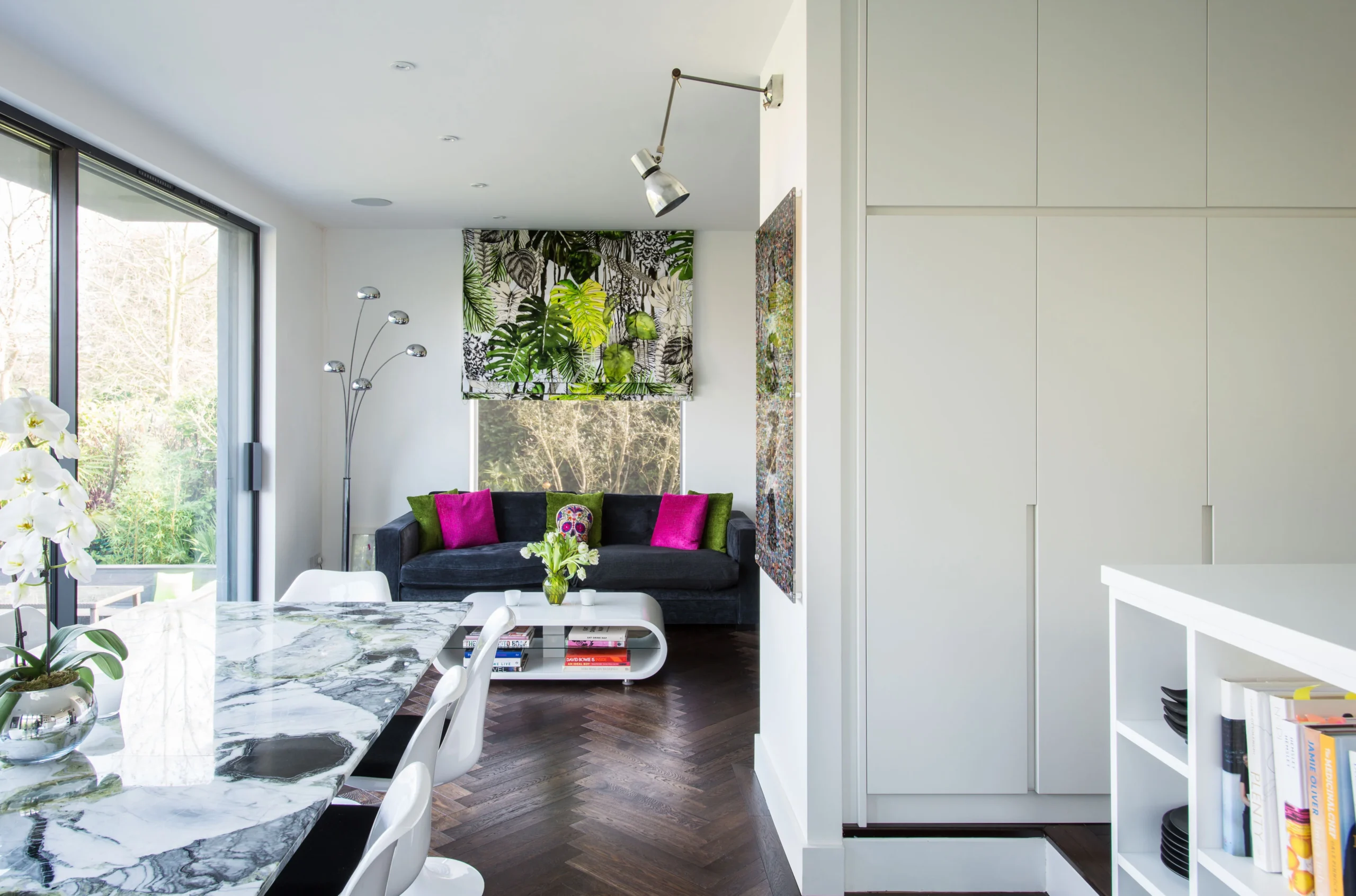
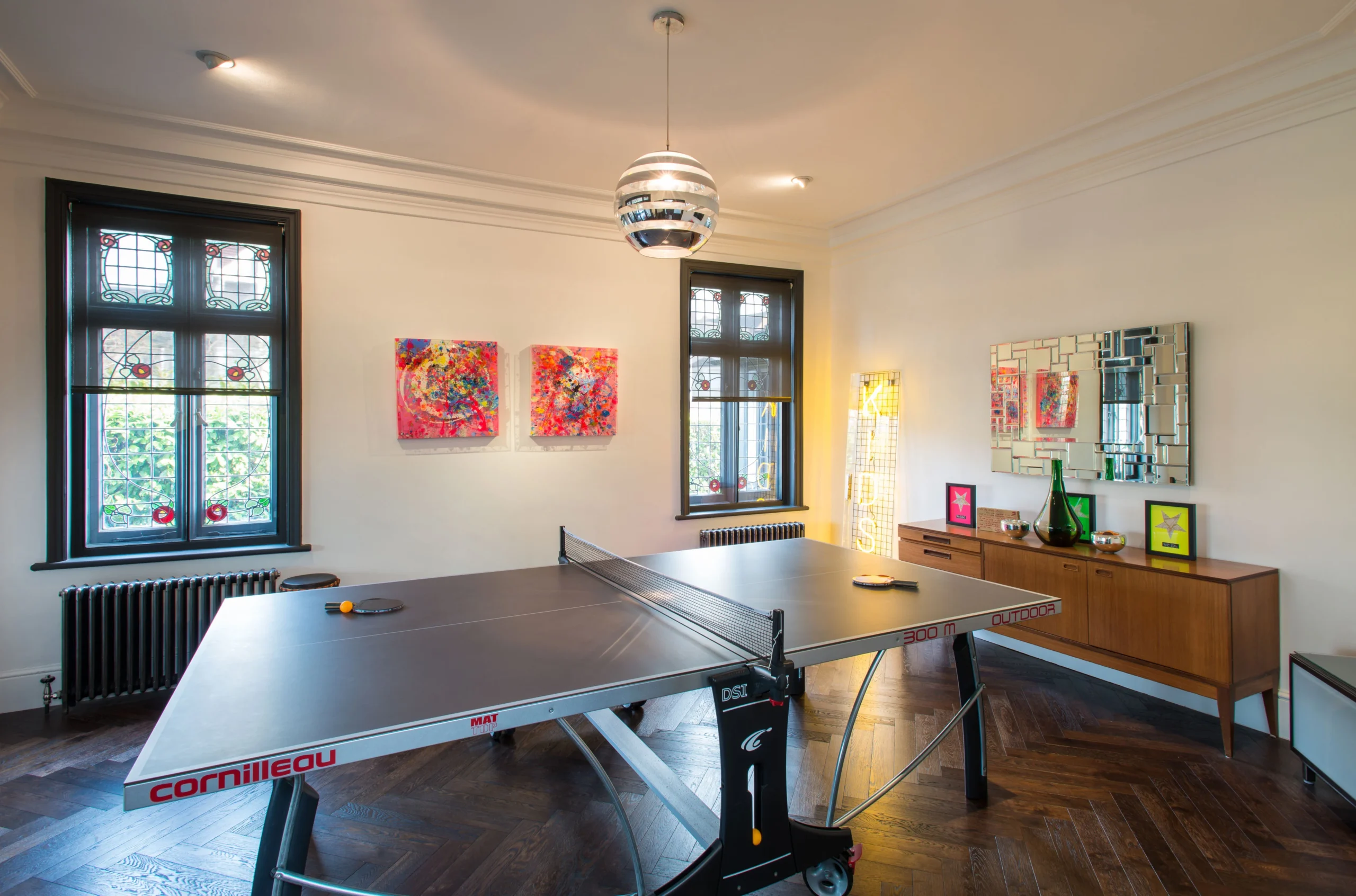
Beyond the kitchen there is a dining area with sliding doors to the deck, and a snug with full-height fitted joinery. In the original part of the house, a games room retains its cornicing and two more stained glass windows. Dark herringbone parquet runs through all of it.
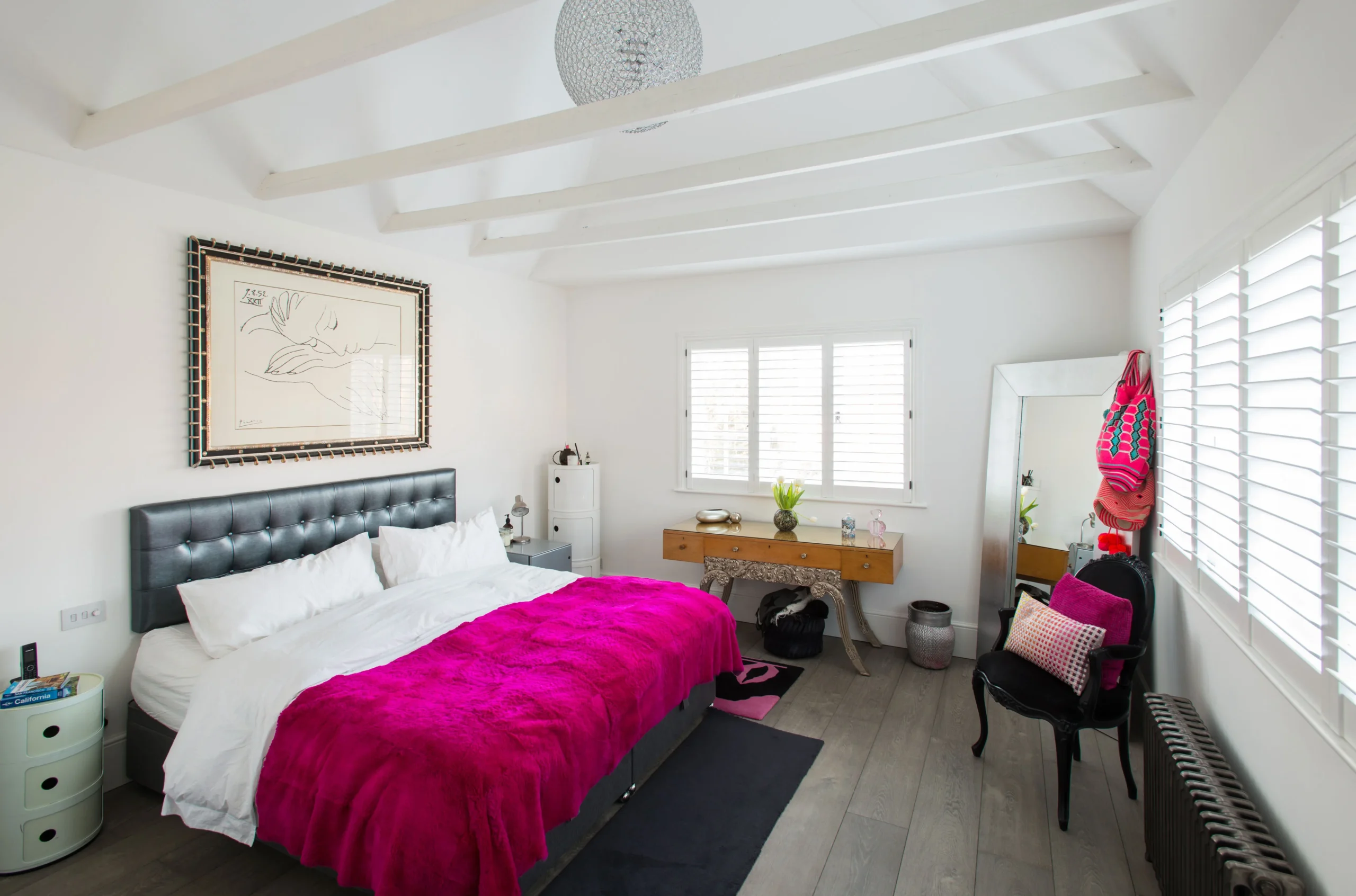
In the roof, a bedroom was formed with the existing beams left exposed and painted, plantation shutters at the windows and pale boards underfoot.
The house was rewired and replumbed as part of the same programme.
Renovating a period house in Willesden Green
What the houses here are like
Willesden Green is mostly Edwardian and interwar, with wide terraces and semis on the roads off Walm Lane and larger houses towards Mapesbury. Plots run deeper than in inner London, which is why most of the work here goes out the back rather than down.
Two things about the stock are worth knowing before anything is drawn. Leaded and stained glass survives in a lot of these houses and is worth keeping, because replacing it convincingly costs more than repairing it and it is most of what makes the front of the house look like itself. And the services are usually original. Rewiring and replumbing take a larger share of a period renovation budget than people expect, and none of it shows when the job is done.
Permission in Brent
Willesden Green falls under Brent Council. Internal work to a house that is not listed needs no planning permission, though building regulations still apply.
A single-storey rear extension of up to three metres on a terraced or semi-detached house, or four on a detached one, is usually permitted development. Between three and six metres there is a prior approval route, where the council writes to your neighbours and gives them 21 days to object.
The Mapesbury Estate conservation area covers a substantial part of the area and those rights are reduced inside it. Side extensions, roof alterations and changes to windows or front boundaries need permission there. Loft dormers normally need a full application either way.
Find out which side of that line your address sits on before design work starts. It changes the programme by months, not weeks.
Party wall
Digging foundations within three metres of next door triggers the Party Wall etc. Act, which on a terrace or semi covers almost every rear extension. Notices go to each adjoining owner, and if one dissents, surveyors are appointed and an award agreed before the ground is broken.
It takes weeks rather than days. Serving the notices at the start rather than when the digger arrives is the difference between a delay you planned for and one you did not.
What a house renovation costs in Willesden Green
A full renovation of a period house in Willesden Green runs between £120,000 and £400,000, or roughly £2,000 to £4,000 per square metre.
Partial work costs considerably less. A single floor reworked, or a kitchen and bathrooms replaced without touching the structure, sits well below that range, and doing a house in stages is a reasonable way to approach it.
You will also see figures of around £35,000 attached to renovations in this area. Those are from-prices for partial work on a house that needs no rewiring, replumbing or structural change. They are not the cost of a full renovation of an Edwardian house, and knowing which of the two you are being quoted for is the most useful thing you can establish early.
What moves a project through the range:
- Period fabric: rewiring, replumbing and replastering behind retained cornices and original glazing. A period house typically costs 20 to 40 per cent more to renovate than an equivalent modern one, and this is most of the reason why.
- Rear extension: £40,000 to £70,000, depending on the glazing and how the roof meets the original building.
- Loft conversion: £55,000 to £85,000 for a dormer, more where the roof has to be rebuilt to a gable.
- Kitchen: £35,000 to £90,000, depending on whether the units are made for the room or taken from a range.
- Bathrooms: £15,000 to £45,000 each.
- Joinery: usually the largest single variable, and the reason a finished house reads as considered rather than assembled.
Allow 10 to 15 per cent on top for contingency. On a period house that is not pessimism, it is the figure that covers what turns up once the floors come away.
These are budgeting ranges. What yours costs depends on the house, and that needs a visit before anyone can put a real number on it.
How long it takes
A full renovation of a house this size runs six to nine months on site. Where an extension and a loft conversion go in as part of the same programme, as they did here, nine to twelve is closer.
The front end is the part people underestimate. Drawings, structural design, party wall notices and finding out what is actually behind the walls all happen before anyone is on site, and on a period house that last one changes the scope often enough to be worth doing properly.
Consent sits in there too. Permitted development you can start on almost immediately, though a lawful development certificate is worth having and takes around eight weeks. A full application to Brent works to an eight-week target from the point it is validated, and validation is not the same day you submit.
Allow nine to twelve months from first conversation to finished house.
How we work
On a period house the difficulty is in the joins. New render meeting old brick. An original window that has to stay exactly where it is while the structure changes around it. A floor level in the new work that meets parquet laid a century earlier without a step or a threshold strip.
None of that gets settled on the drawings. It gets settled by whoever is on site when the detail arrives, and by whether they have done it before.
Van Peake brings in skilled trades we have worked alongside for years and manages each of them directly. James Peake stays on the project from the first visit to the finished house.
We take on residential projects right across London, from a single room to a whole house. Our house renovation page covers how we approach them.
Common questions
What does a house renovation cost in Willesden Green?
Between £120,000 and £400,000 for a full renovation of a period house, or roughly £2,000 to £4,000 per square metre. Partial work costs considerably less. Lower figures you see quoted, often around £35,000, are from-prices for partial work rather than a full renovation including rewiring, replumbing and structural change.
Do I need planning permission to renovate a house in Willesden Green?
Not for internal work to a house that is not listed, though building regulations apply. A single-storey rear extension of up to three metres on a terraced or semi-detached house is usually permitted development. The Mapesbury Estate conservation area covers a substantial part of Willesden Green and reduces those rights, and loft dormers normally need a full application to Brent either way.
How long does a house renovation take in Willesden Green?
Six to nine months on site for a full renovation, and nine to twelve where an extension and a loft conversion go in at the same time. Consent adds roughly eight weeks in front of that, and party wall notices need serving well before work starts on a boundary. Nine to twelve months from first conversation to finished house is realistic.
Why does renovating a period house cost more?
Because most of the budget goes on what you cannot see. Rewiring, replumbing and replastering behind retained cornices and original glazing typically adds 20 to 40 per cent over the same work on a modern house, before anything is spent on finishes.
Can original stained glass and parquet be kept?
Usually, yes. Original leaded glass can be repaired and re-leaded rather than replaced, and parquet can be lifted, cleaned and relaid where the structure underneath needs work. Both take longer than replacing them, which is why it is worth deciding early rather than on site.
Do you only work in Willesden Green?
No. We work on residential projects across London. Willesden Green is one of the areas we have completed projects in, alongside Camden, Clapham, Balham and Kensington.
Start your project
We take on residential projects of all sizes across London, from a single room to a full house renovation. Whether you are still working out what is possible or you know exactly what you want, please get in touch and we would be more than happy to talk it through with you.
Call 020 3503 1158 or email hello@vanpeake.co.uk
Contact Us